3/20/2026
 |
|
|
|
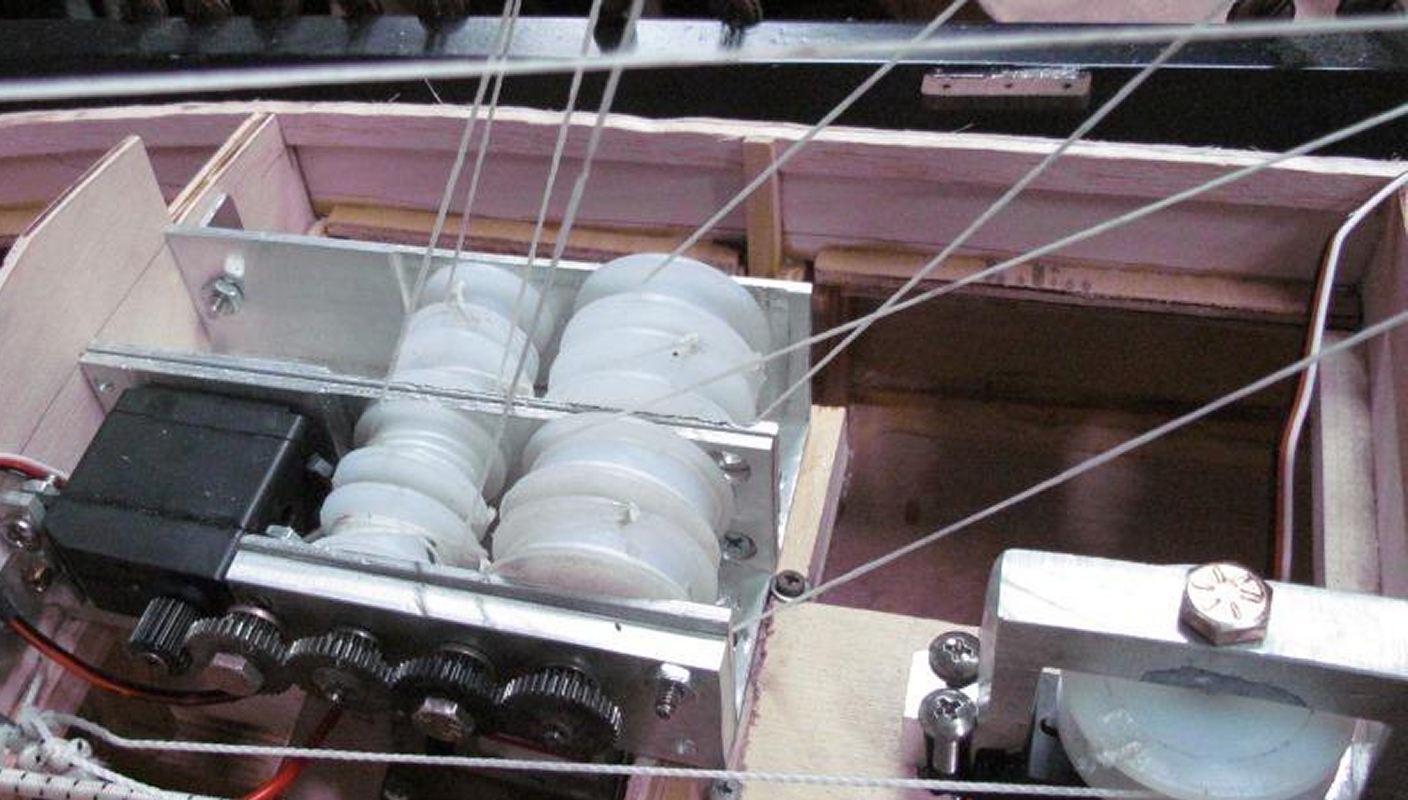
Previous Page | Next Page | Table of Contents The Homer Bracing Winch Back in 2011, Vince Homer posted a video about his idea for a bracing winch, let's let him explain it...
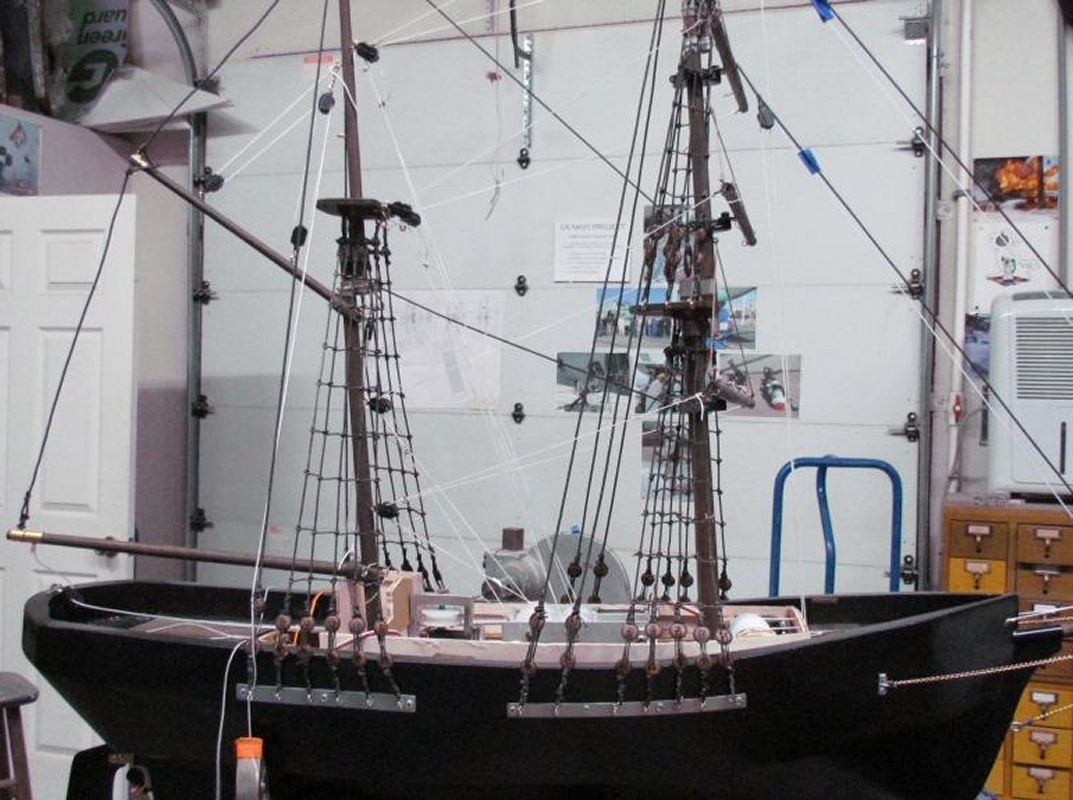
I've never tested this, though it looks workable. Vince seems to have installed them in a brigantine model, but that too was more than a decade ago, and I haven't fond anything demonstrating it's operation, or the model sailing, yet. The only drawback I've seen pointed out about this system is that the spring side will give too easily, and if the wind caught that side, it could pull the yards around against the spring loaded side of the winch.
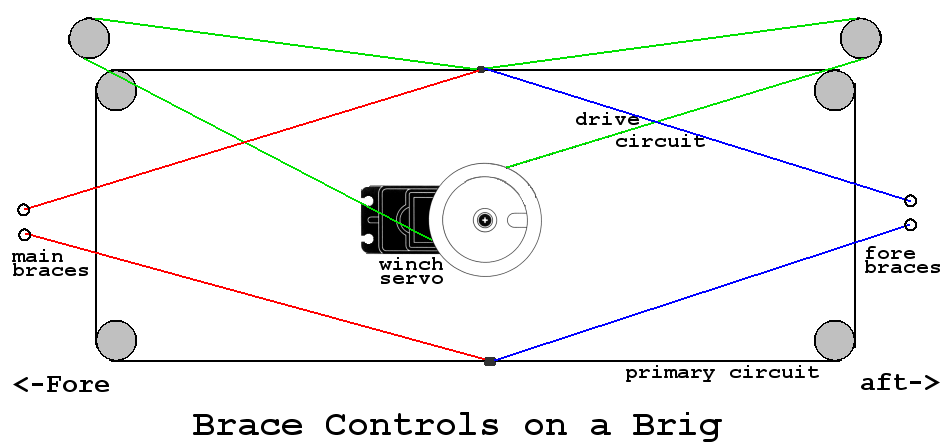
Looped Circuits
Tacks and Sheets
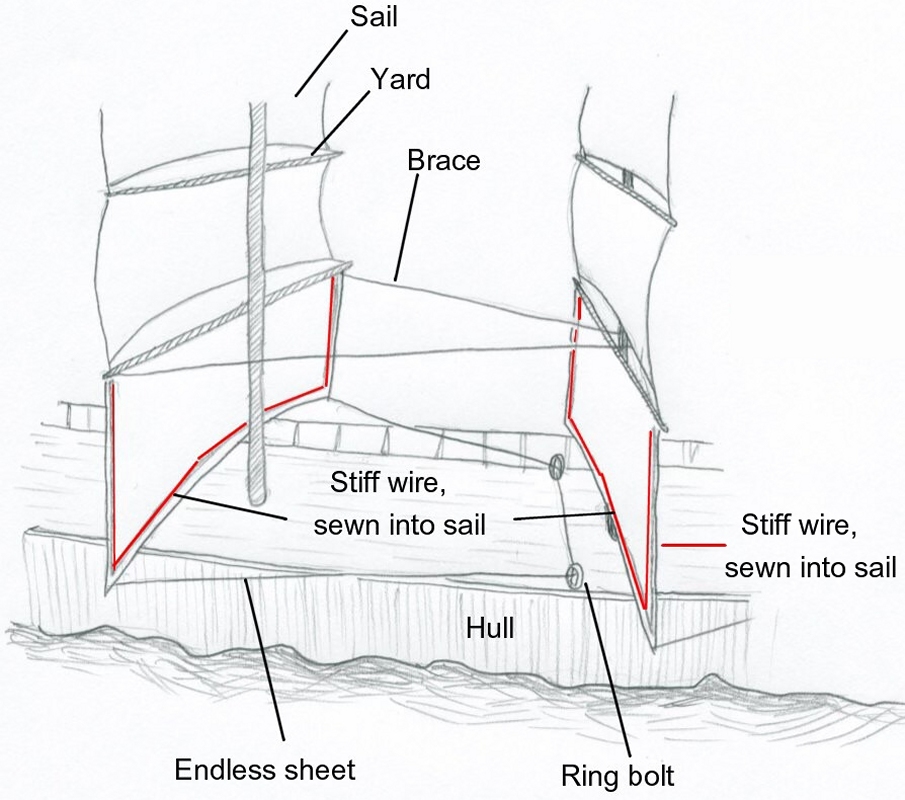
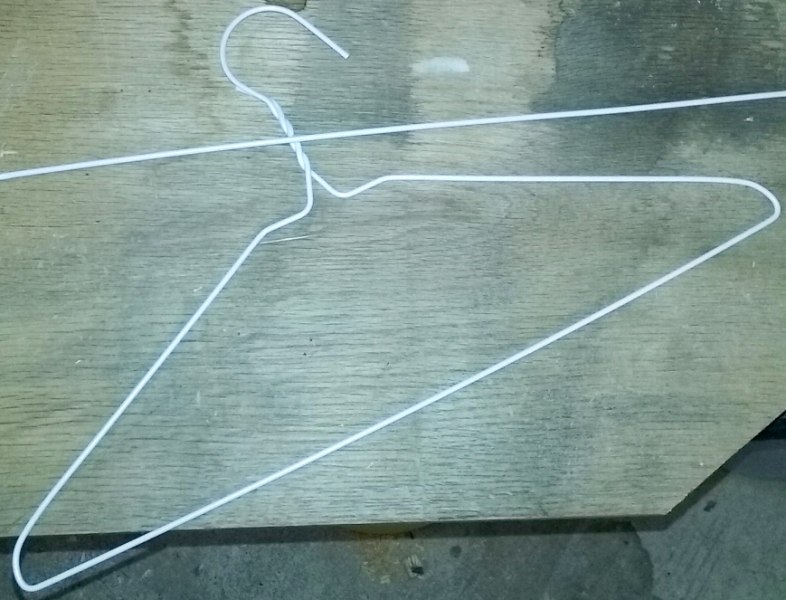
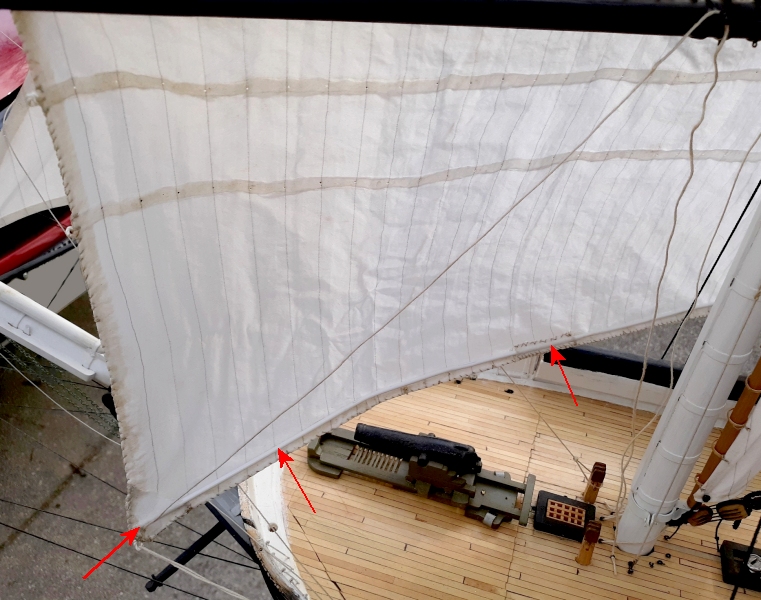
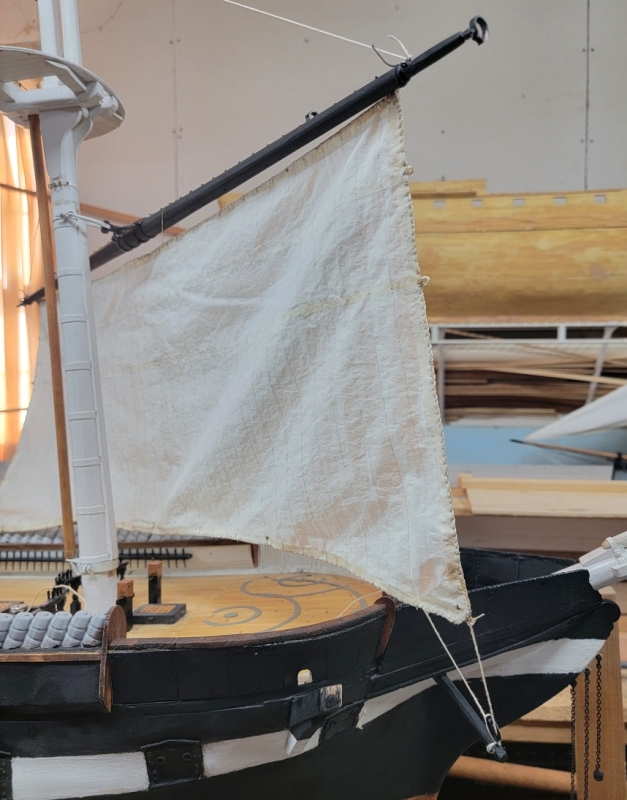
On the more direct bracing systems, mentioned at the beginning, it's not a big issue; but when using winches, the need to deal with slack to keep the lines in their proper places on the drums, makes dealing with these sails more difficult, especially when the winch drums are horizontal. A very common method is to put a yard at the bottom of the sail. This was actually done on some real ships and that spar is called a Bentinck Boom. On my Constellation I used white plastic coated clothes hangers, sewed pockets in the clews, a sleeve in the center of the foot of the sail, to hold the rod, and so it could be easily removed to shorten sail when it's too windy. A running sheet-line is run to hold the sail back, so it doesn't flap like a flag. This set-up works, but it's not very stable going up-wind, and the clews always stick out like King Charles' ears. It's a stop-gap solution until I can figure out a way to handle the tacks instead.
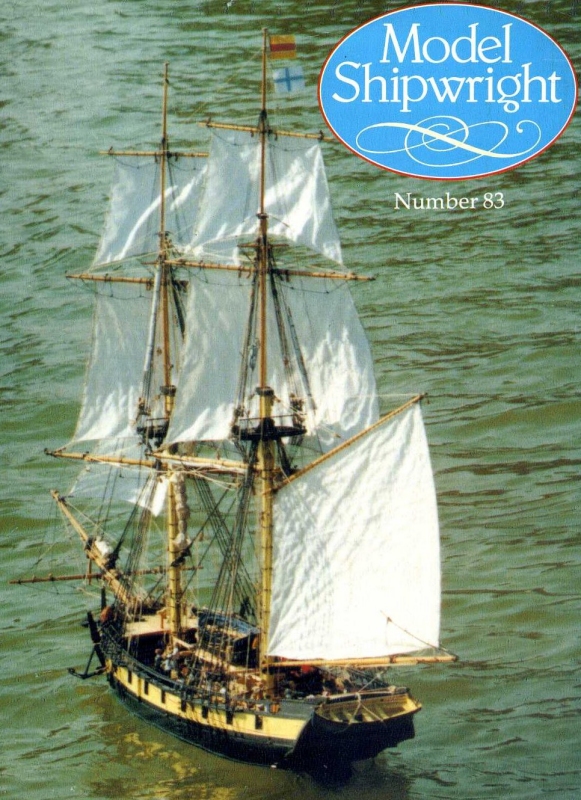
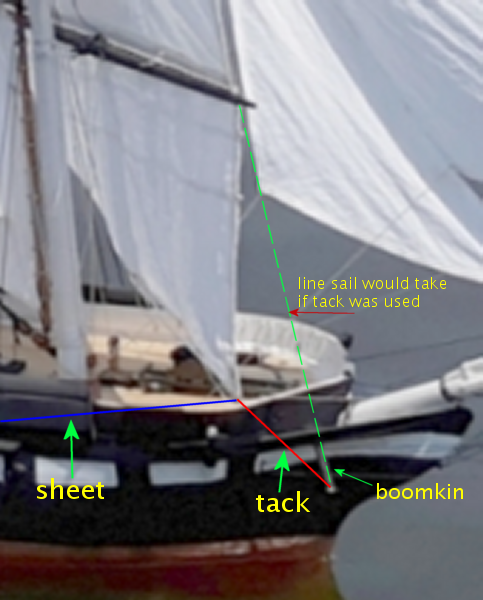
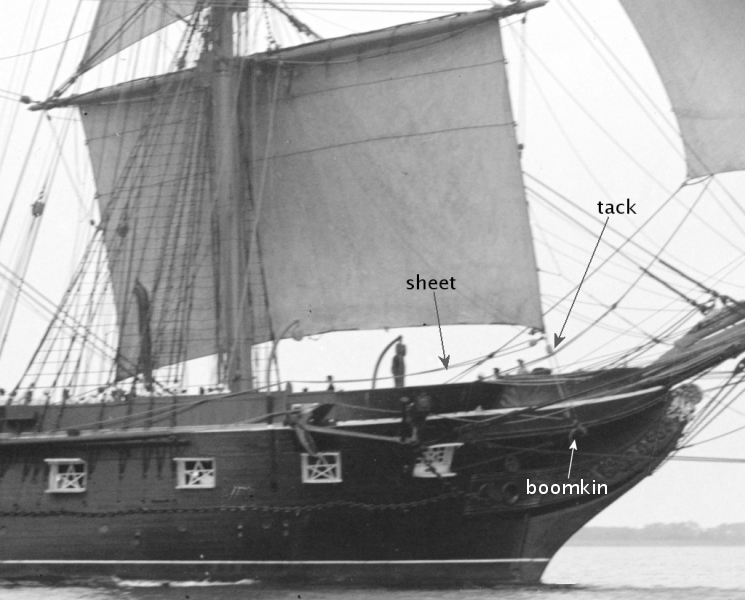
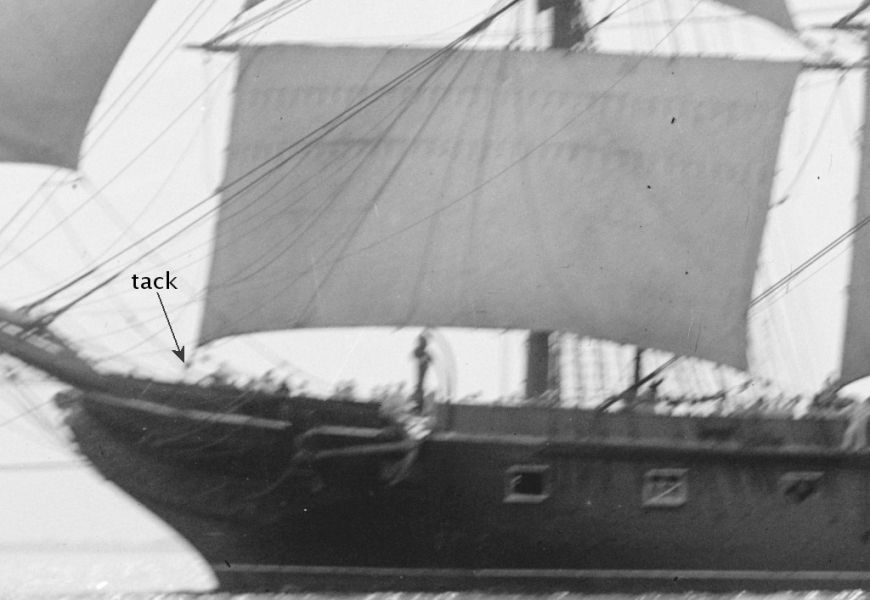
When sailing close-hauled, or on-the-wind, the wind-ward clew of loose-footed squares (courses) needs to be pulled forward and tight, or the model will not sail as close to the wind as possible. Modeler's seem to be caught up dealing with the sheets for these sails, and I suppose that intuitive to someone not familiar with sailing square-rig, but it's not how a real sailing vessel works. If you want your courses to function on your model, the best way is to make the tacks active, instead of the sheets. You still need the sheets when sailing off-the-wind, to keep the sail from flapping like a flag, but they need not be active, that is, connected to a winch, make the tacks active instead. On the fore-course, the tacks typically run to a spar sticking out of the bow of the boat called a boomkin. The main-course tacks go to a place on deck or a channel. In the first picture (below), a green broken line shows the line the sail's luff would take if pulled by the tack instead of relying on an inactive (not directly controlled by a winch/servo) Bentinck boom. An active tack, in fact, would pull the tack of the sail forward and down, which would also pull the course yard with it, and that would travel up each sail, hardening the windward edges of all the sails making them better set for sailing to windward. These images show the fore-course drawn forward, with a tight luff, by the tack for sailing to windward on an actual sailing vessel.
The sheets of the course, on the other hand, need not be active, but can simply be a loop (going from one clew, through some fairleads to retain it, to the other clew. It hold that sail back when the wind's from astern (behind), and/or abeam (the side). So, how to control the tacks? |
|
|
|