3/14/2026
 |
|
|
|
Previous Page | Next Page | Table of Contents Handling tension/slack with moving winches
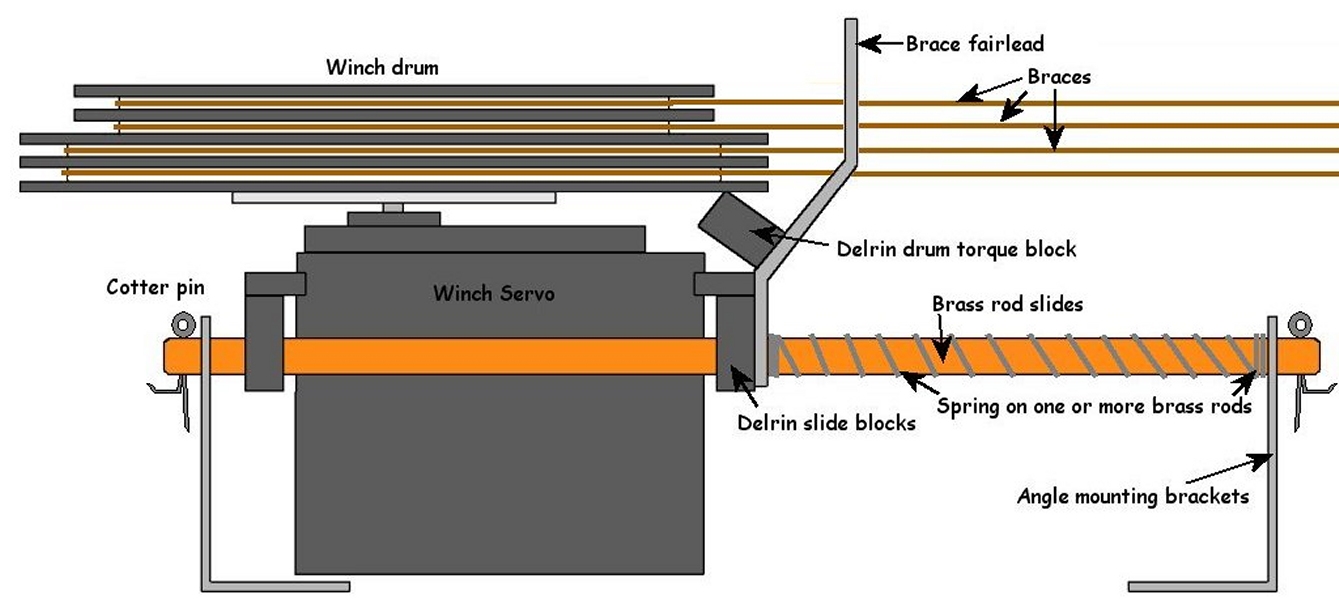
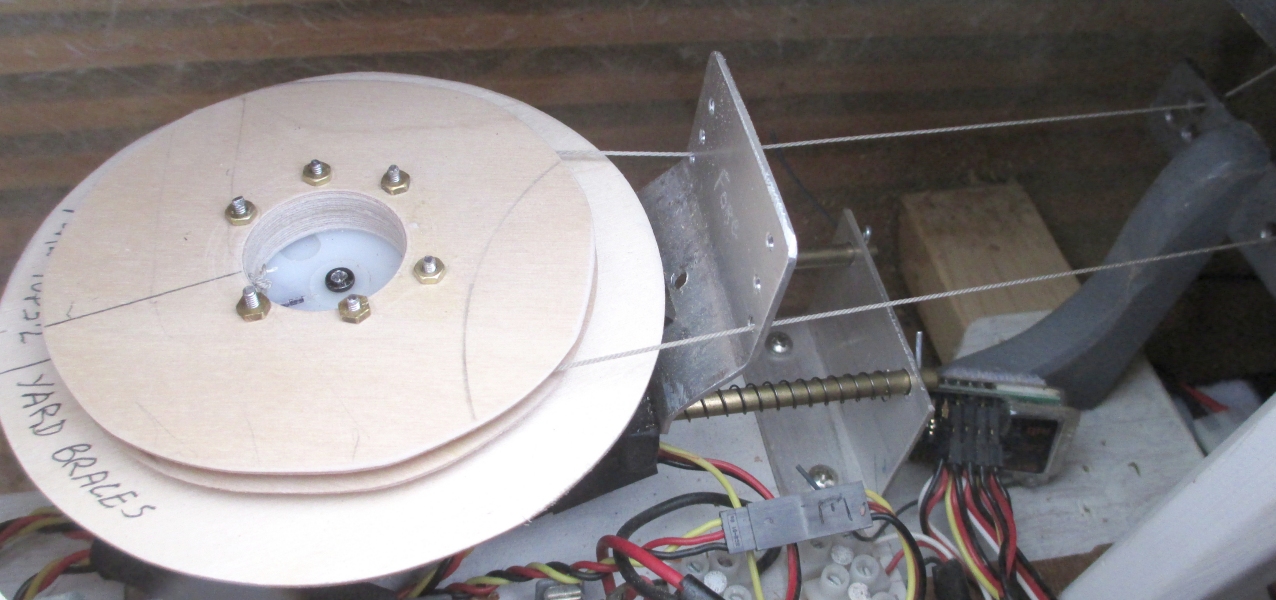
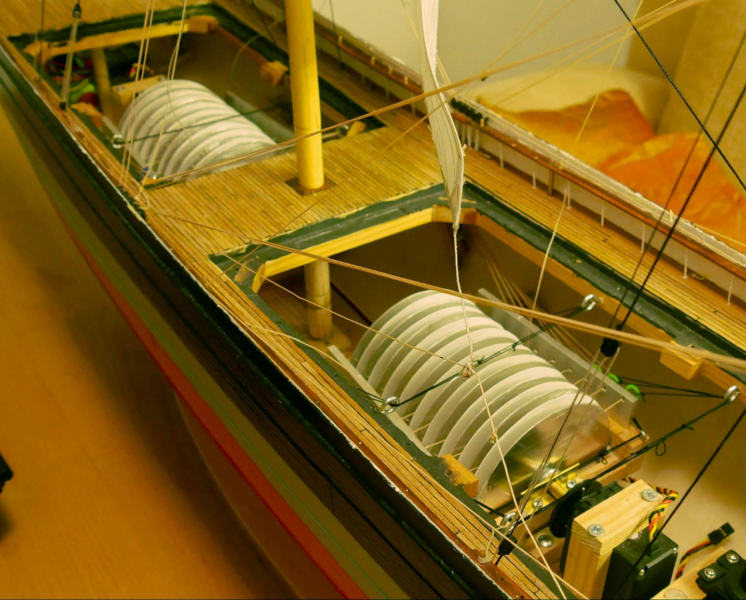
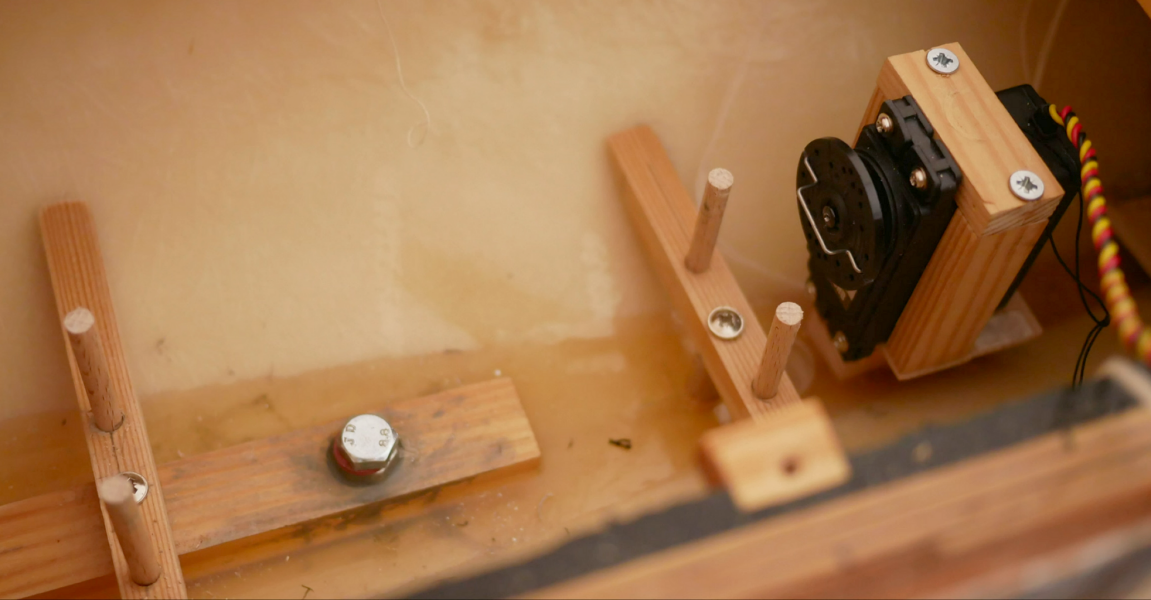
The winch servo is mounted on blocks that slide on rods pushed by springs which are also on the rods. The springs only need be strong enough to push the servo back against the slack in the brace. If the springs are too stiff, the system may jam, or cause damage somewhere else. In this case, the winches are horizontal which actually makes slack more of a problem, as the braces are more apt to run off their part of the drum because of sagging slack in the brace. Any winch system should have a fairlead onto the winch-drum, whether the servo moves or not.
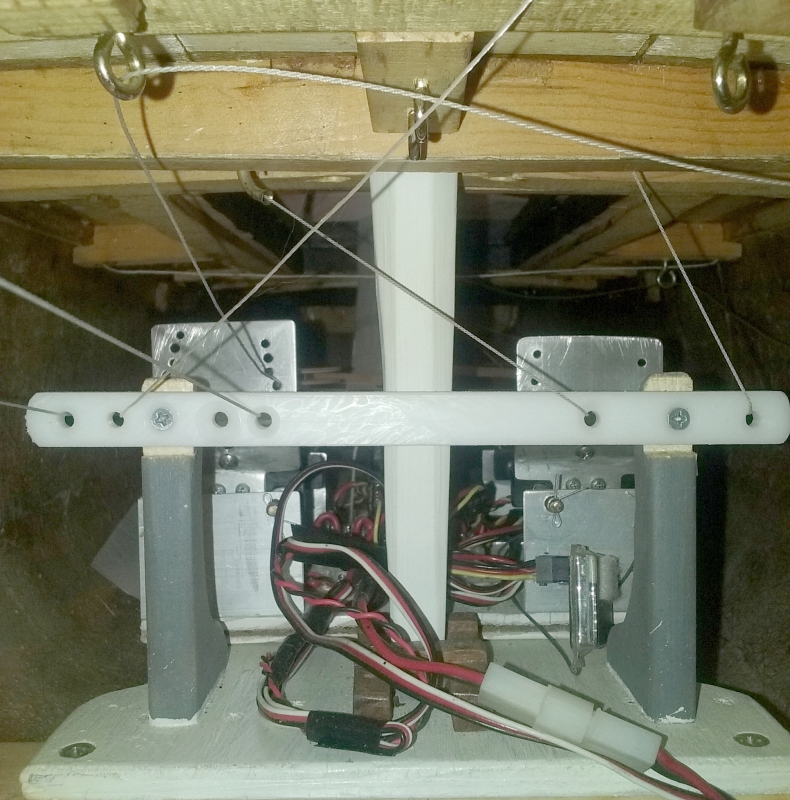
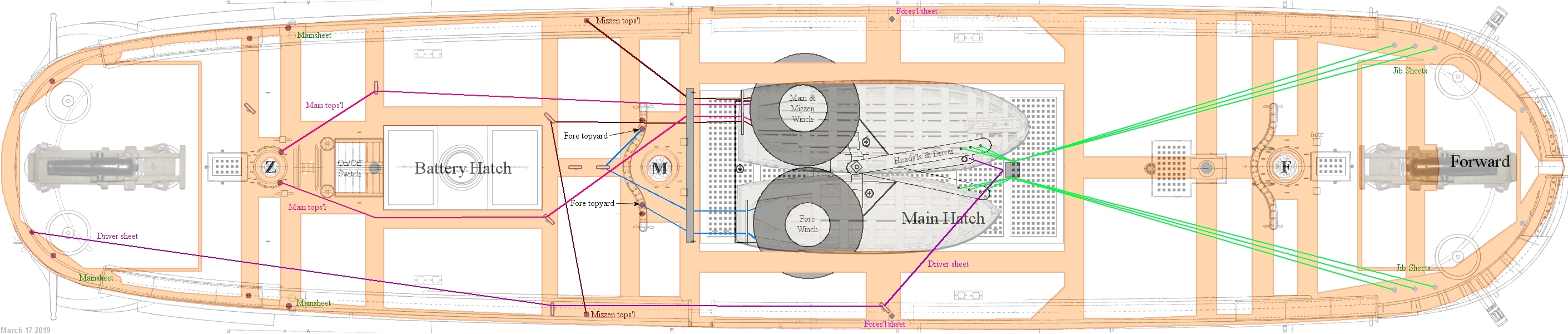
It may not appear so in the photos, but there are no mods to the servo itself; it's simply mounted on plastic blocks by it's normal mounting spots, so there's nothing to void the servo's warranty, and it's fairly simply to remove or replace it, with just a small screw-driver. Also note there's a block mounted on the winches fairlead called a drum torque block; this supports the winch-drums for pulling to one side possibly over-working the servo. Also note, all the winches only bace the tops'l yard on each mast; fore on one winch; main & mizzen on the other. Another note, with winch bracing, there's going to be lines moving through fairleads; eyes, tubes, rings, pulleys, etc, below deck until they emerge above deck to get to the yards they control, where they may be passing through even more fairleads. The image below is a schematic of the routing of Constellation's control lines below deck, most of which are screw eyes in the deck beams, to get them to were they come through the deck. That's a lot of line rubbing and making friction; so much so that when I was testing using natural fiber cord, it wouldn't move at all! Replacing that cord with polyester sail-thread (Dacron) that I ropewalked into 3-stranded line, worked, and still works perfectly.
Some video of the sliding brace winch in action.
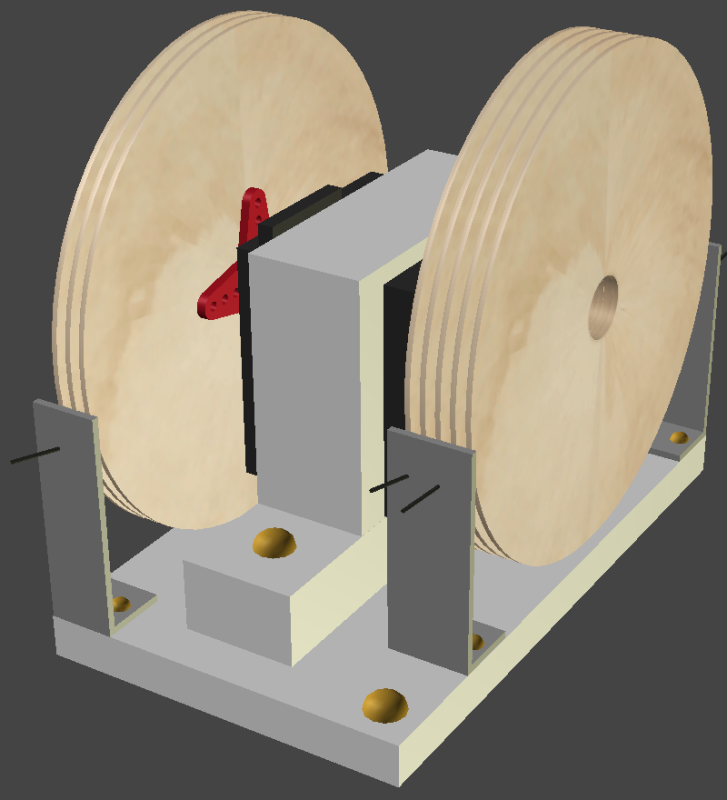
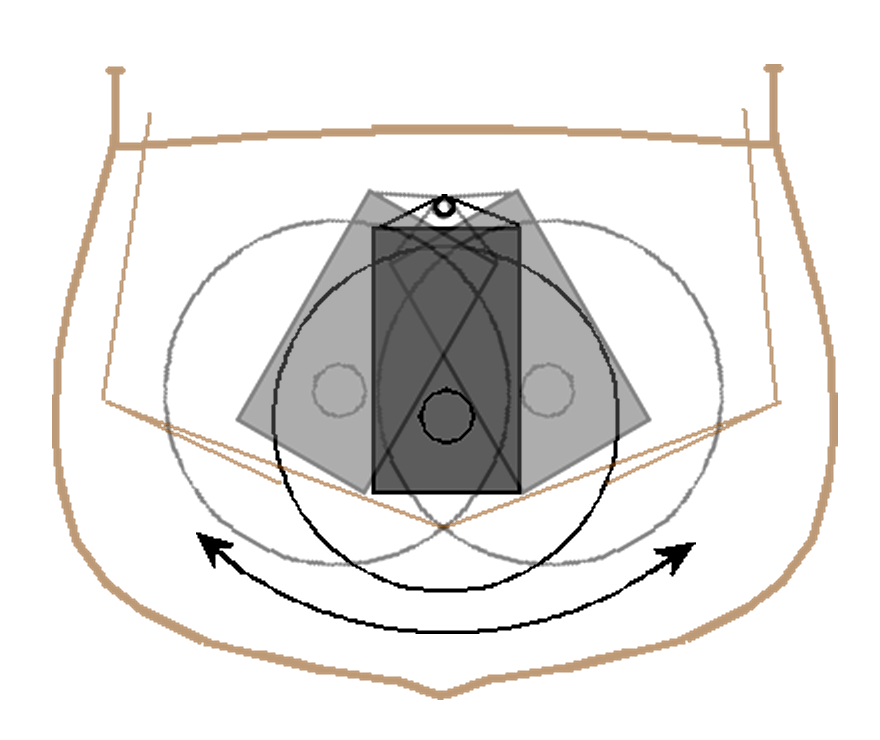 Another moving winch method of dealing with slack/tension is to mount the winch horizontally, so the drums are verticle, and the servo is mounted in a pendulum fashion. The winches hang from a pivot allowing them to swing,
with the winch-drums set a-thwart (across) the hull. As with the previous sliding winches, the winch can move toward the side taking the brace in, countering the slack of the other side.
There should be some sort of centering in the form of springs or elastic, to prevent excessive play in the system.
Another moving winch method of dealing with slack/tension is to mount the winch horizontally, so the drums are verticle, and the servo is mounted in a pendulum fashion. The winches hang from a pivot allowing them to swing,
with the winch-drums set a-thwart (across) the hull. As with the previous sliding winches, the winch can move toward the side taking the brace in, countering the slack of the other side.
There should be some sort of centering in the form of springs or elastic, to prevent excessive play in the system.
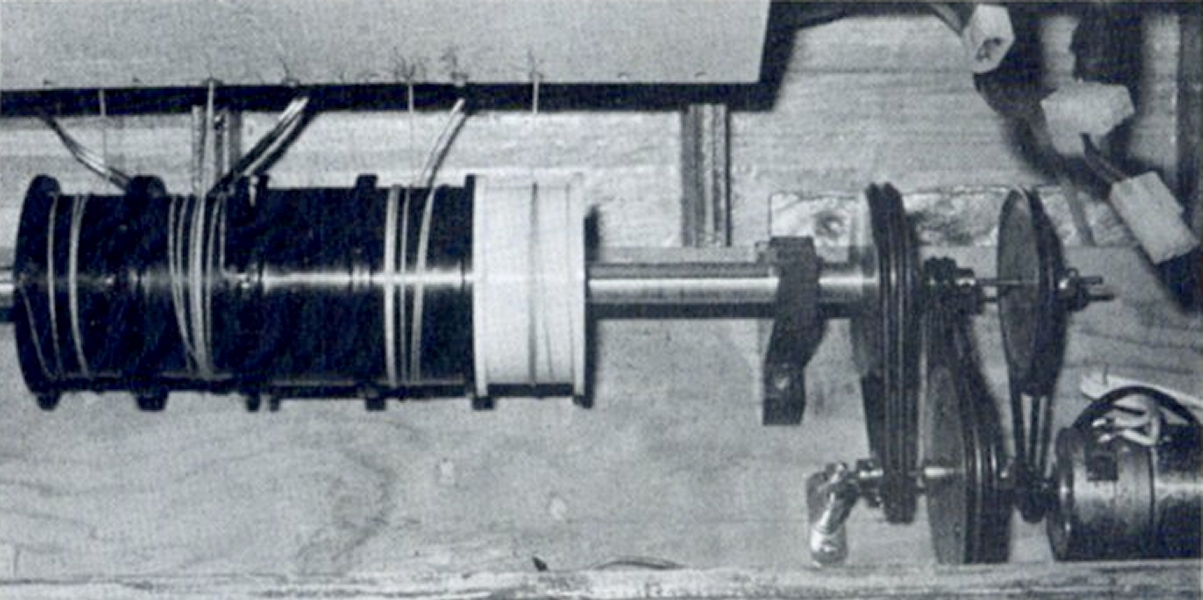
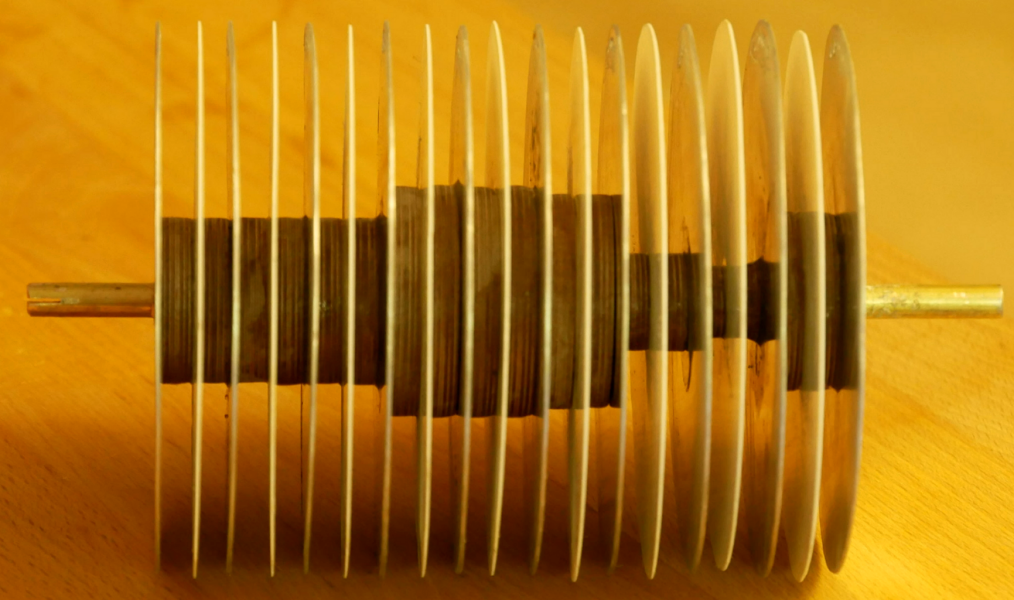
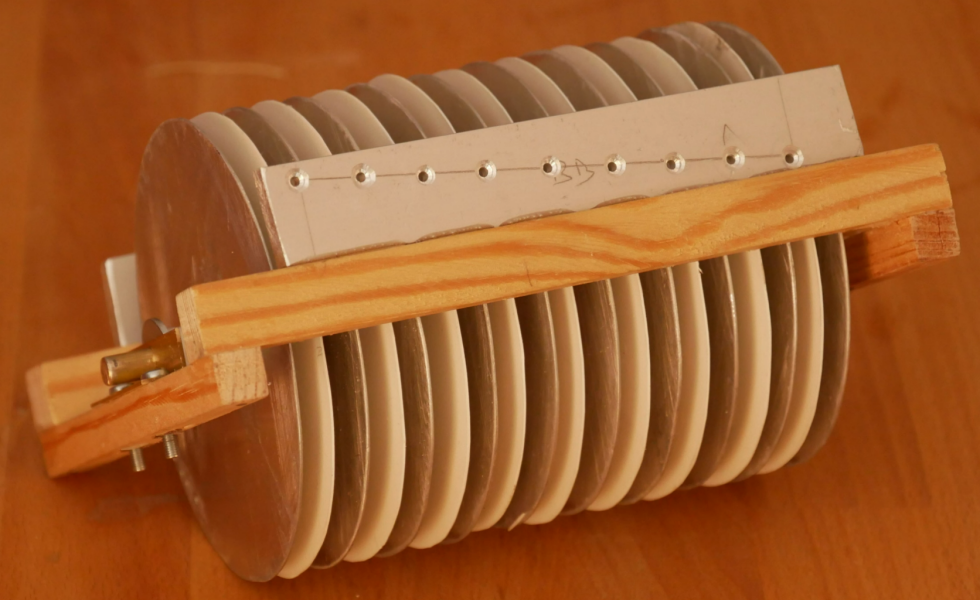
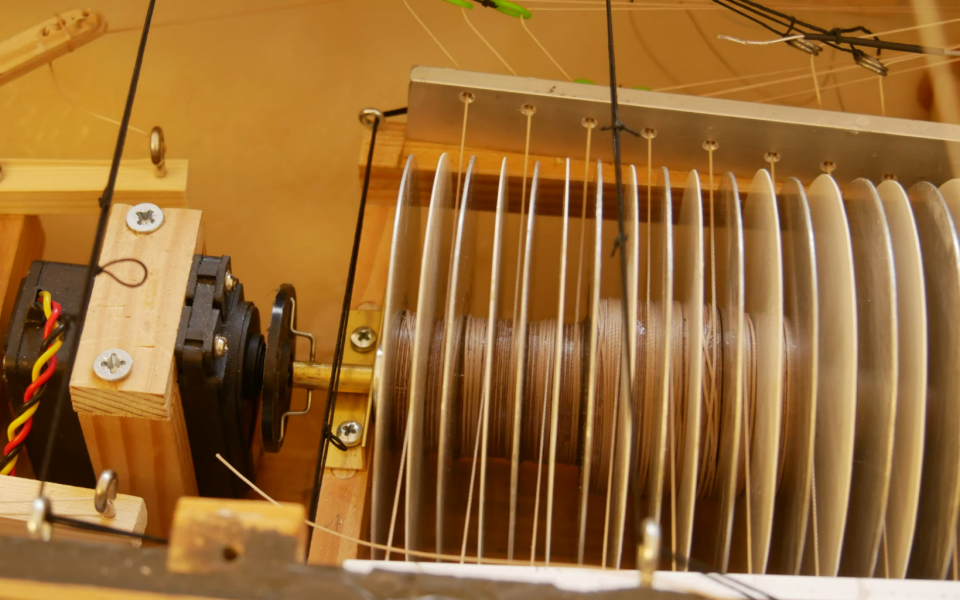
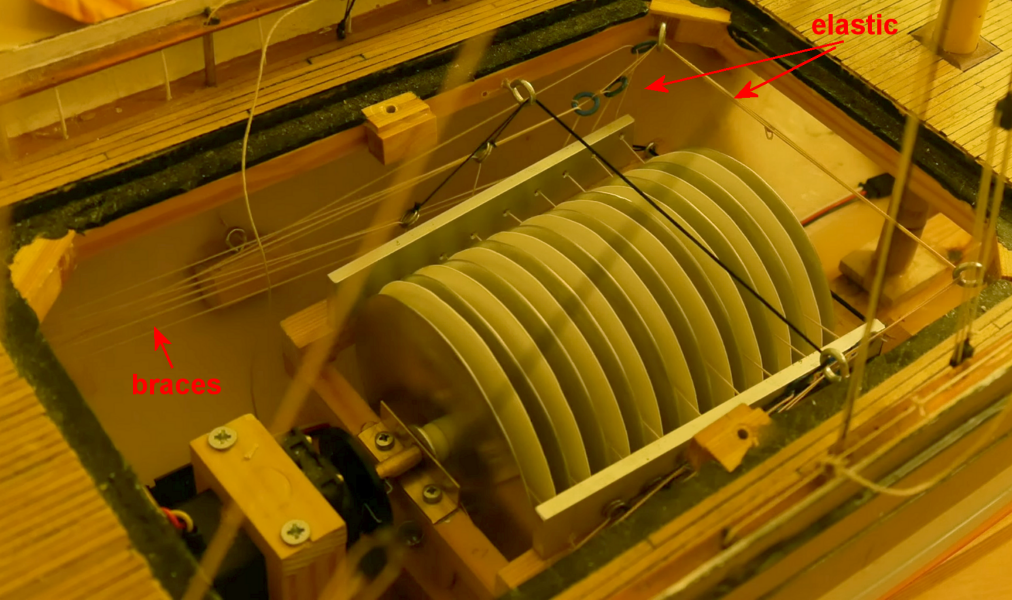
Georg Reinbold uses a more modular, version of this system in his bark Nernberg (1:75 scale, I think). Using sized drums, to get the right pull length for each yard, as detailed previously in the drum-making section; and large flanges to keep everything in it's place. His set-up is actually quite simple, and modular, so it's easy to maintain or repair. He actively brace every yard, prototypically, on two winches/channels, which adds a little complication. To tension the braces, Georg uses plastic ring attached to elastic. Because, below-deck, the braces past through tube, rings, eyes, etc; there's a lot of friction, so he recommends using a PVC braided cord, saying natural fiber will wear quickly and anything else will bind. I've found that polyester sail-thread (Dacron) walked on a ropewalk into rope works better as it presents less surface area than braided cord, hense, less friction.
There's a two drums for each mast, one for it's port brace, the other for the starboard brace. As explained on the previous page, each drum is sized to pull or pay out the requisite length in the number of rotations the drum will make. What I could not find was how he attaches the braces to their drum, I suspect they may be glued.
I'm leaning toward this set-up in my 1:36 scale frigate Macedonian as opposed to what I used in Constellation primarily because it's easier to handle the sheets/tacks of the course sails (with no yard below them). I'll diagram and explain all that later. Georg has a YouTube channel (at least as of this writing) with several videos of Nurnberg's development, where you can see all this in action; these images are actually screen-captures from his videos. In his videos, Georg also explains some of the idiosyncrasies up in the rig and dealing with them. A positive this set-up has over the Sliding Brace Winch, decribed above, is this system makes it easier to handle tacks/sheets on the courses (the square sails with no yard below them). |
|
|
|