If you find anything that's come before to be complicated, then brace yourself, cause this one's gonna make smoke come out of your ears!
 This one comes from the Swiss builder of a big model of the clipper ship Cutty Sark, and is inspired by the Jarvis Winch mentioned before. Their YouTube channel is jccmodele.
What follows is a paraphrased translation to English that's proably lacking in explaination, but if you don't understand it, it's probably better you use a simpler set-up.
This one comes from the Swiss builder of a big model of the clipper ship Cutty Sark, and is inspired by the Jarvis Winch mentioned before. Their YouTube channel is jccmodele.
What follows is a paraphrased translation to English that's proably lacking in explaination, but if you don't understand it, it's probably better you use a simpler set-up.
quote: Having tested many other resolutions, compensation springs, counter wieghts, rubber bands, the turning of yards did not lead to the simplest resolution but it is satisfactory.
Having noted that on certain big sailing boats they used windlasses to turn conic spools, [Jarvis Winch]
this road makes it complete valid for the model (Cutty Sark), but what a job!
(click pics for larger image and captions)
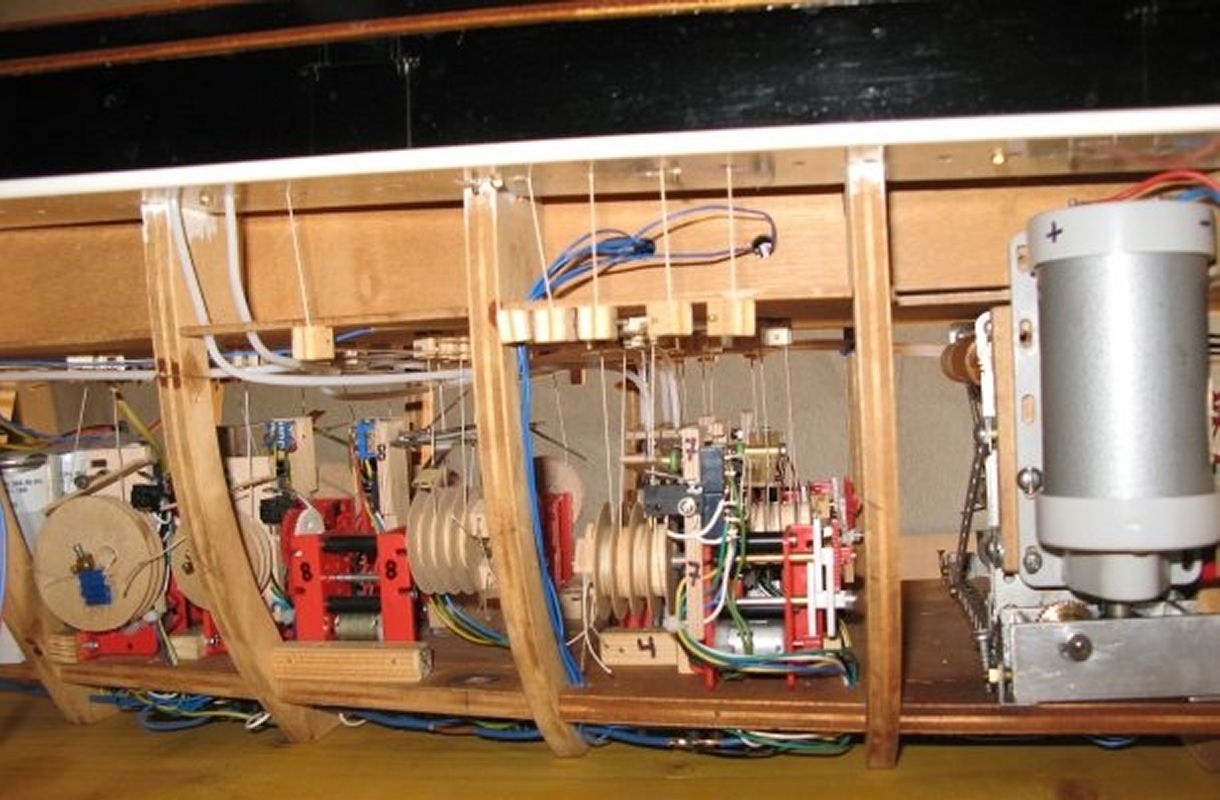
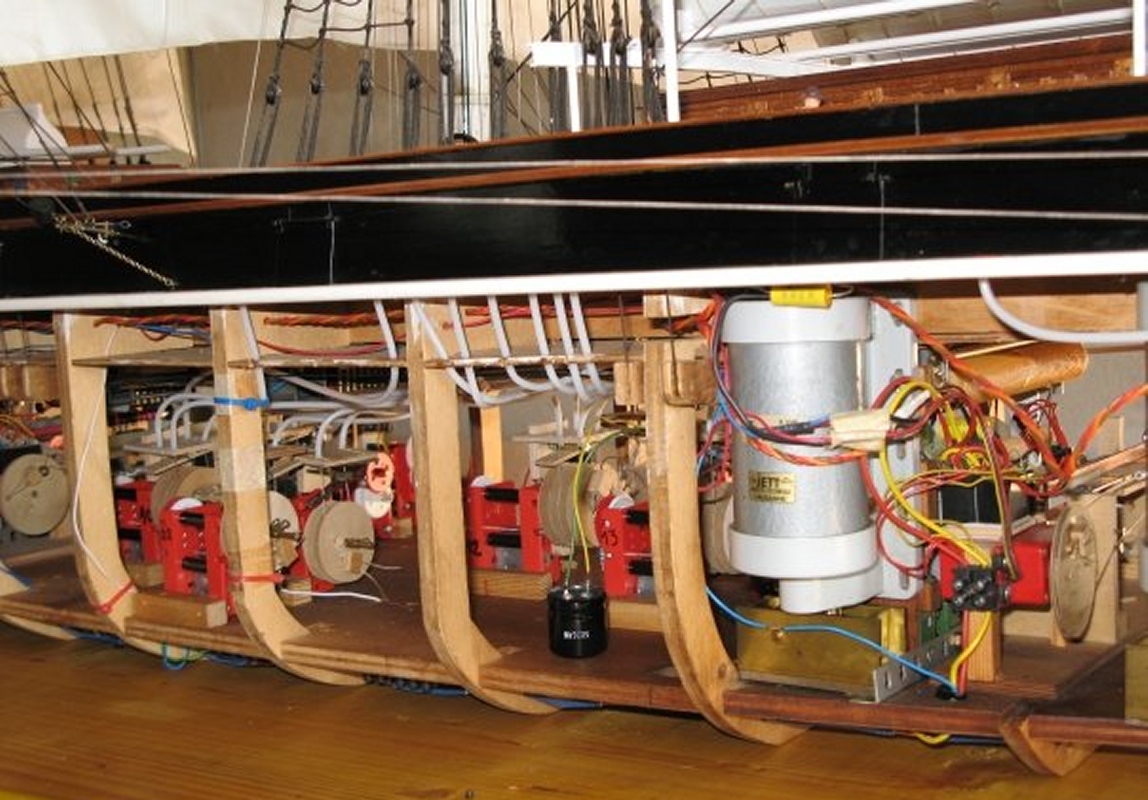
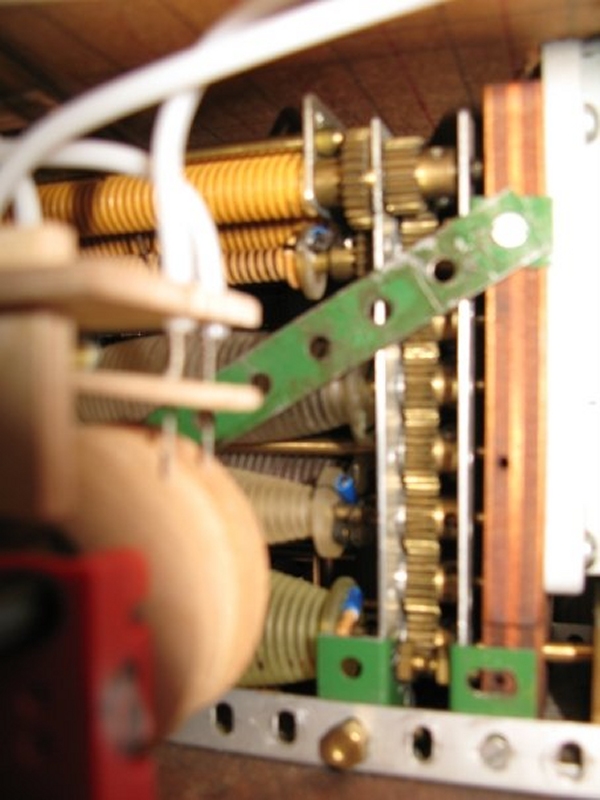
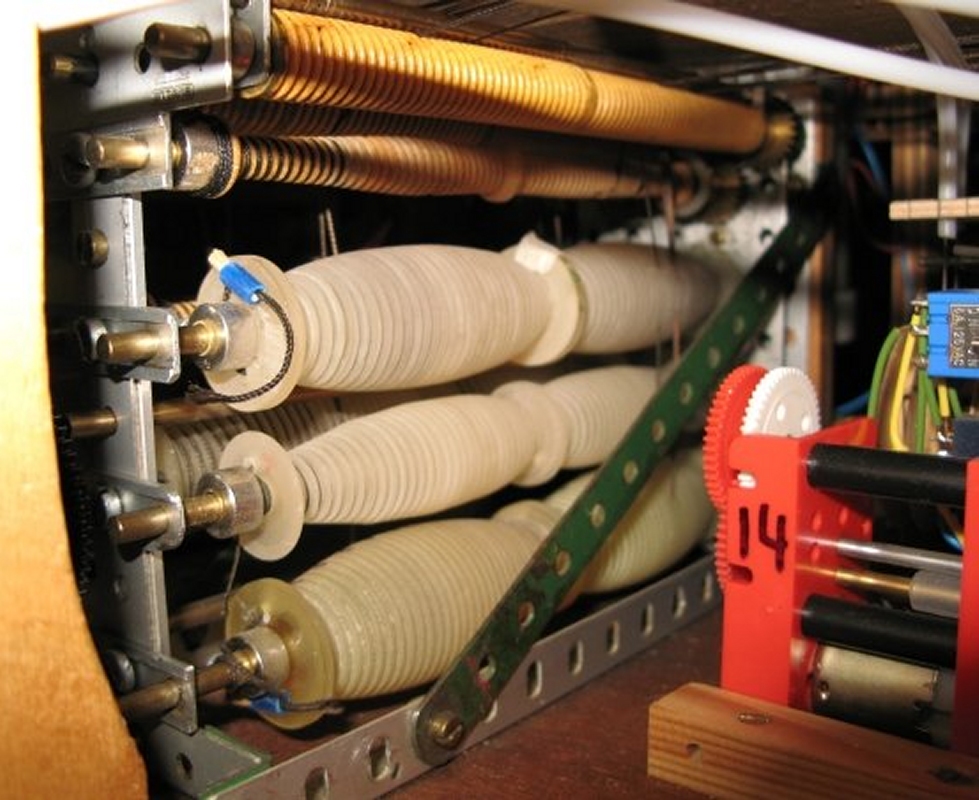
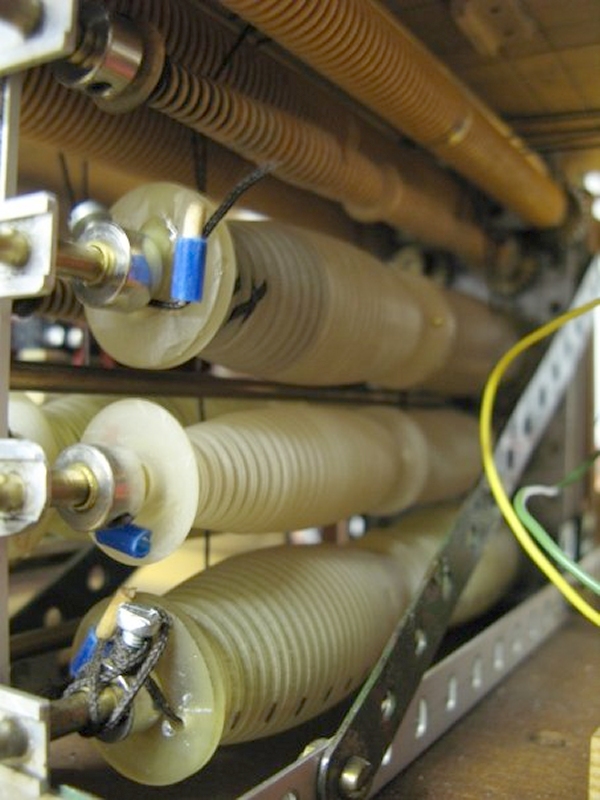
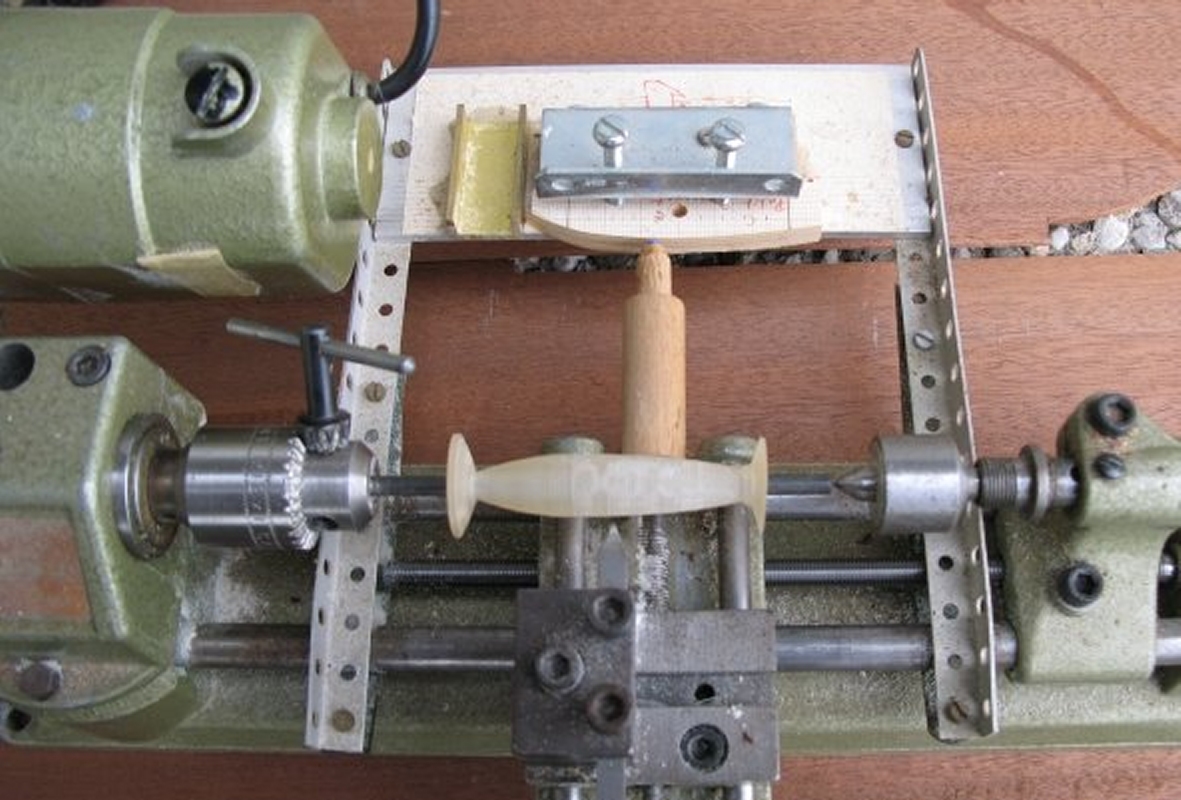
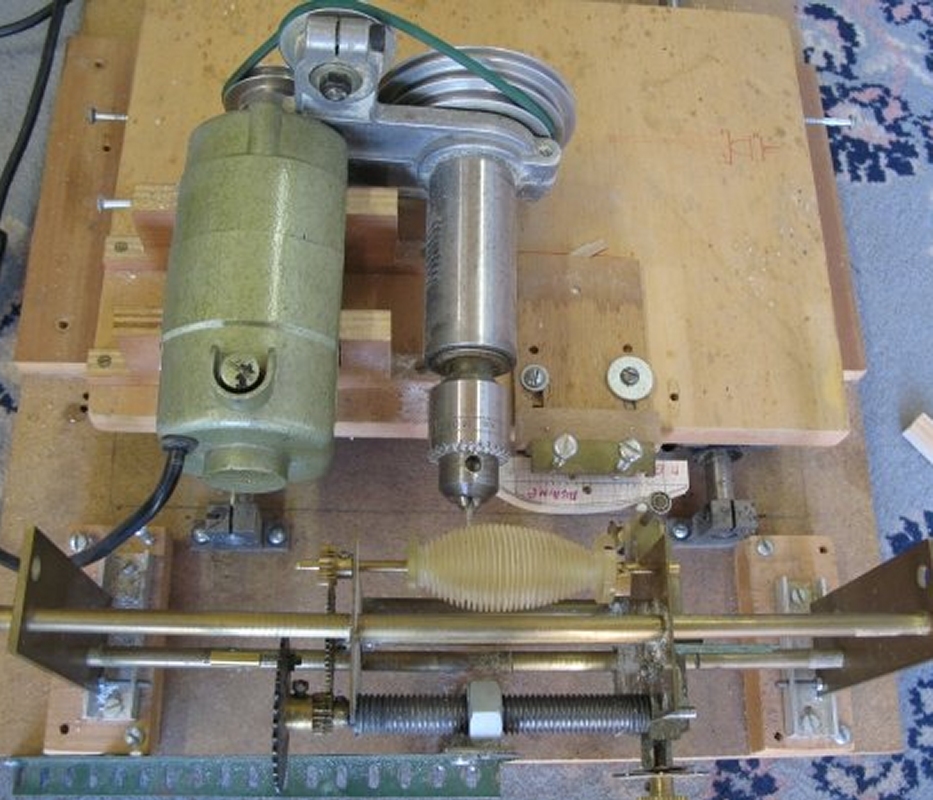
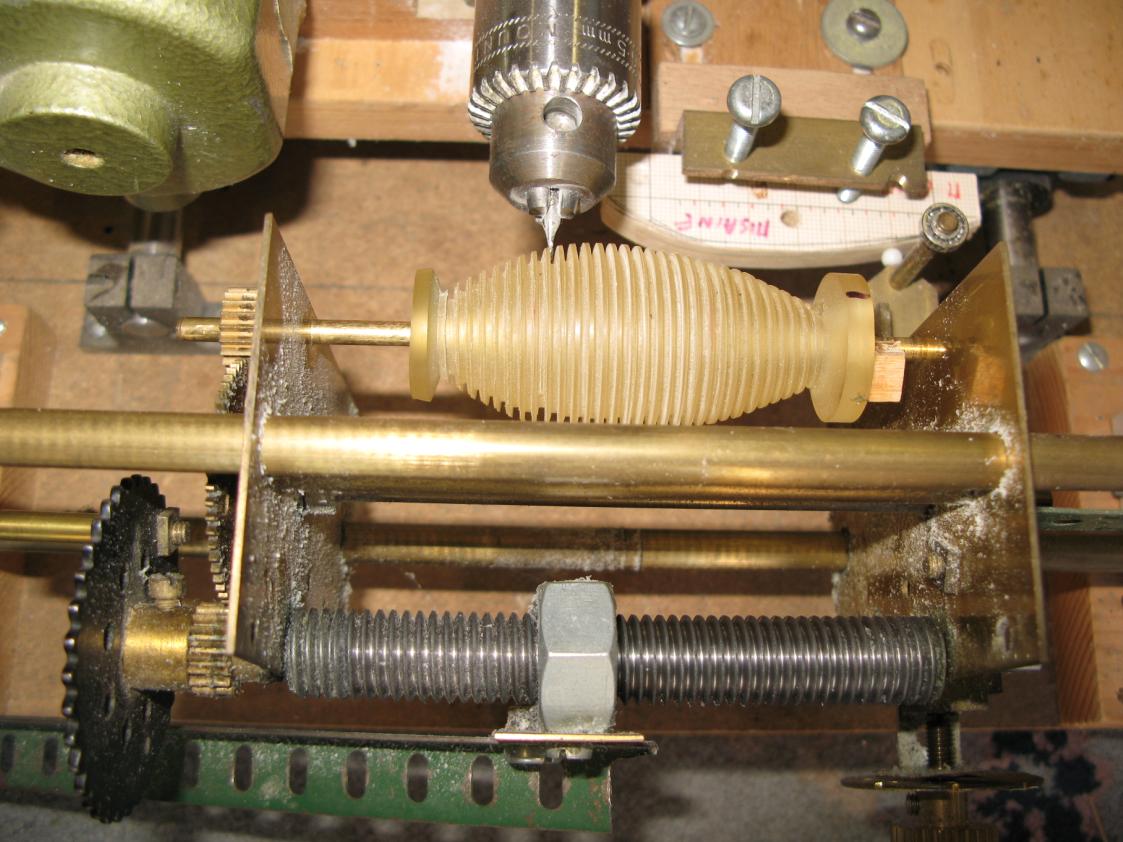
Construction of the Spools
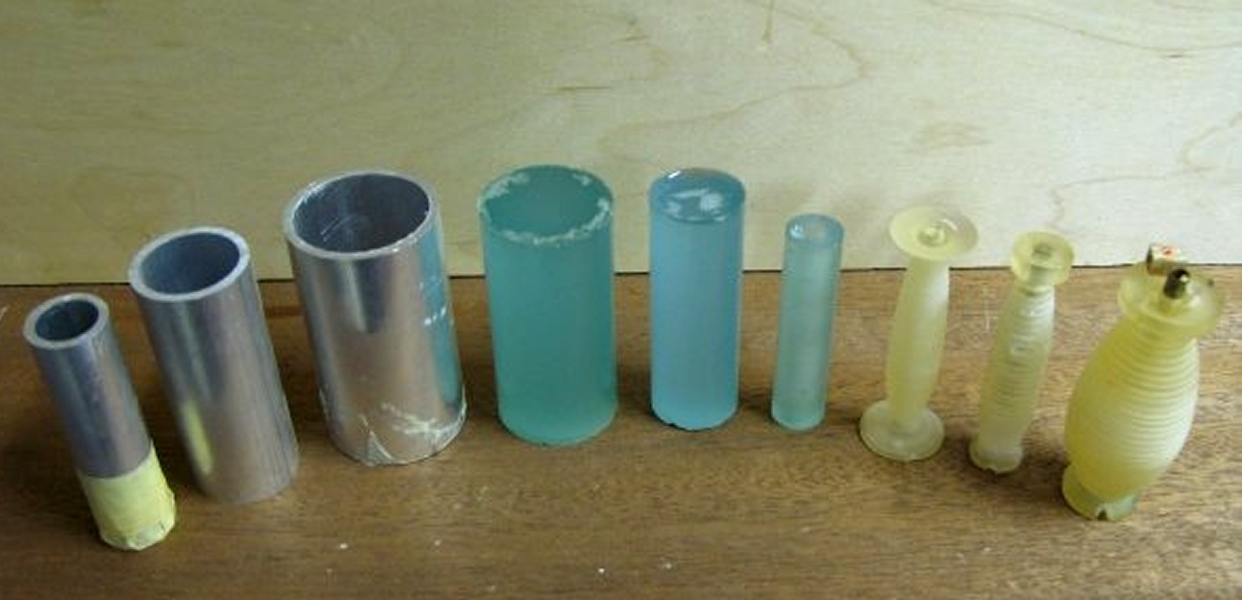
The cylinders are molded in epoxy using 3 sizes of aluminium tubes to get the general diameters needed.
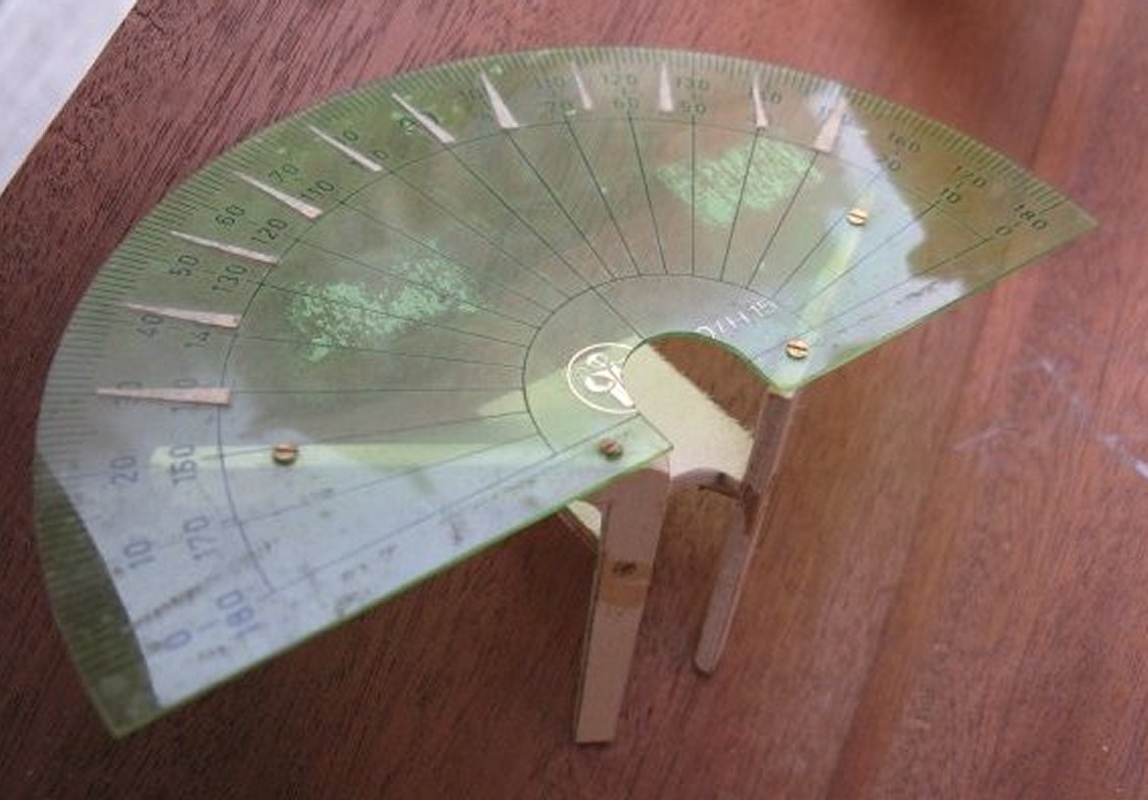
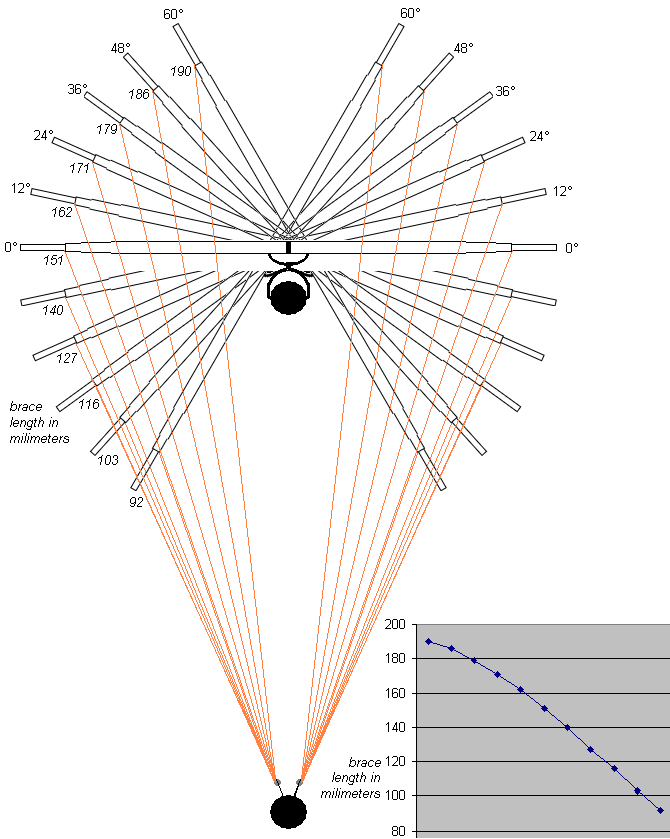
A protractor jig is used at each yard to measure the brace length every 12 degrees to 60 degrees port and starboard.
The cylinder will be groved so every 3 revolutions will rotate the yard 12 degrees
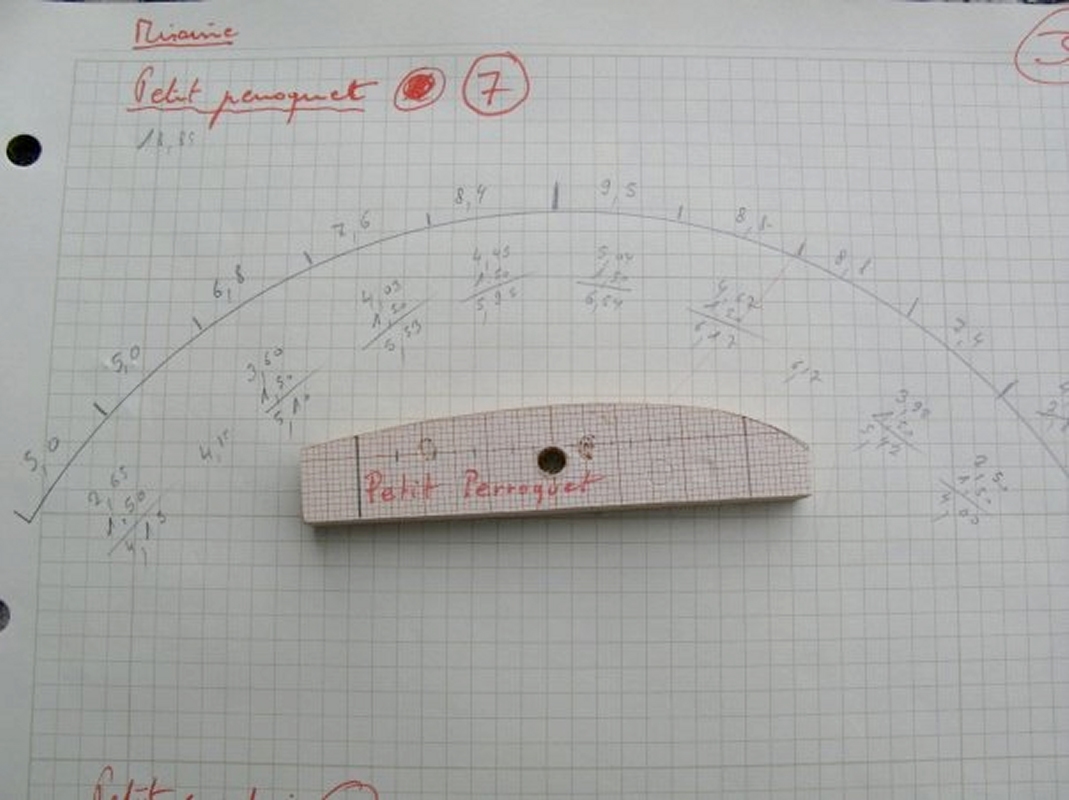
The diameter of the cylinder (in the grove) at a point every three turns is the length at that 12 degree point, divided by 3.1416.
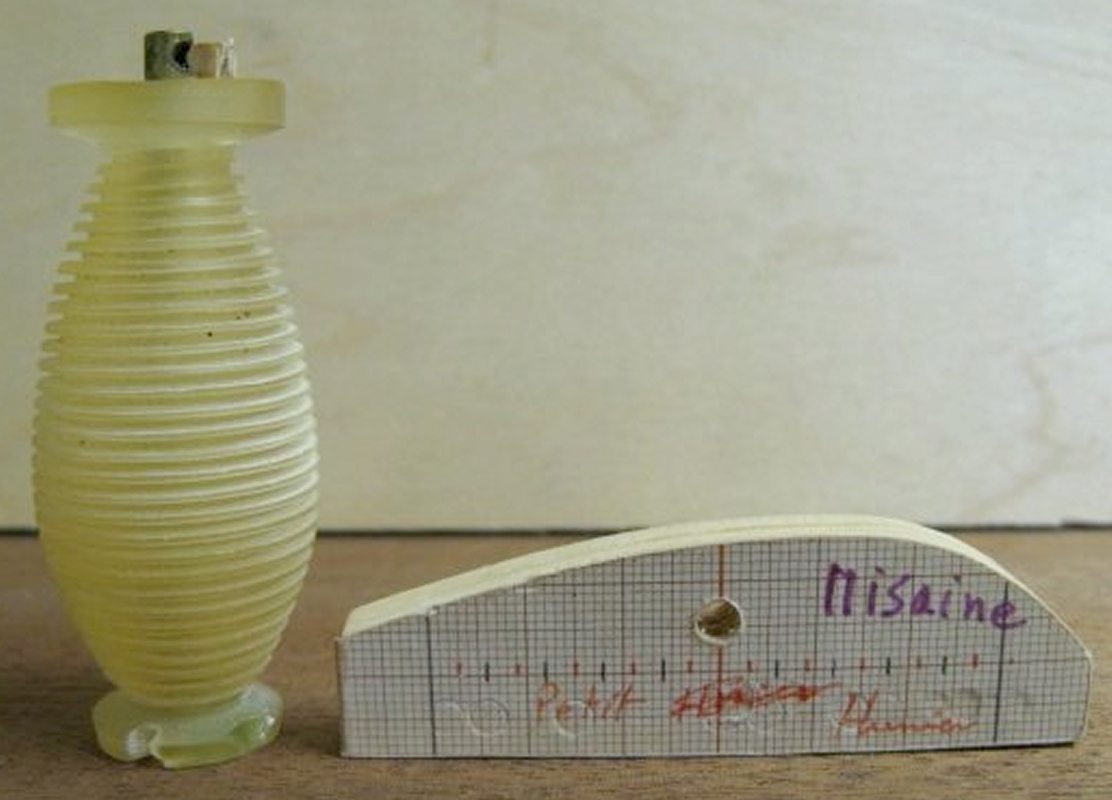
half the diameter is marked on and all the points connected by a spline to reveal the shape of the bobbin.
This pattern is cut and used as a guide for the threading machine specially built for this purpose.
2 bobbins are cut for each yard and mounted in the rig mirrored on the same axle for each yard.
The contour of the bobbin wraps the brace line according to its diameter, assuring a constant tension of the brace.